Tesla Maintenance Schedule: What Each Model Needs and When
There’s no engine oil to change in a Tesla, and the maintenance list Tesla gives is short. Rotate the tires every 6,250 miles (10,000 km). Replace the wiper blades every year and the cabin air filter every two years, and if your car has HEPA filters, change them every three years (every two on Cybertruck). Get the brake fluid checked, and if your roads are salted in winter, have the brake calipers cleaned every year or 12,500 miles (20,000 km). Under Controls > Service > Maintenance, the car suggests when items such as wipers and filters are next due.
Tesla maintenance schedule by model
Everything here comes from Tesla’s current owner’s manuals. An interval covers every generation of a model unless its cell says otherwise.
| Item | Model 3 | Model Y | Model S and Model X | Cybertruck |
|---|---|---|---|---|
| Tire rotation | 6,250 mi (10,000 km) | 6,250 mi (10,000 km) | 6,250 mi (10,000 km) | 6,250 mi (10,000 km) |
| Wiper blades | Every year | Every year | Every year | Every year |
| Cabin air filter | Every 2 years | Every 2 years | Every 2 years | Not listed (see HEPA) |
| HEPA filters | Not listed | Every 3 years, if fitted (with carbon filters) | Every 3 years, if fitted (Model X adds carbon filters) | Every 2 years; yearly off-road or on dirt roads |
| Brake fluid check | 4 years (UK); no figure (US) | 4 years (UK); no figure (US) | No figure (US) | Every 4 years |
| Brake calipers, salted roads: yearly or 12,500 mi (20,000 km) | Clean and lubricate | Clean (2025 and newer); clean and lubricate (2020–2024) | Clean and lubricate | Clean and lubricate |
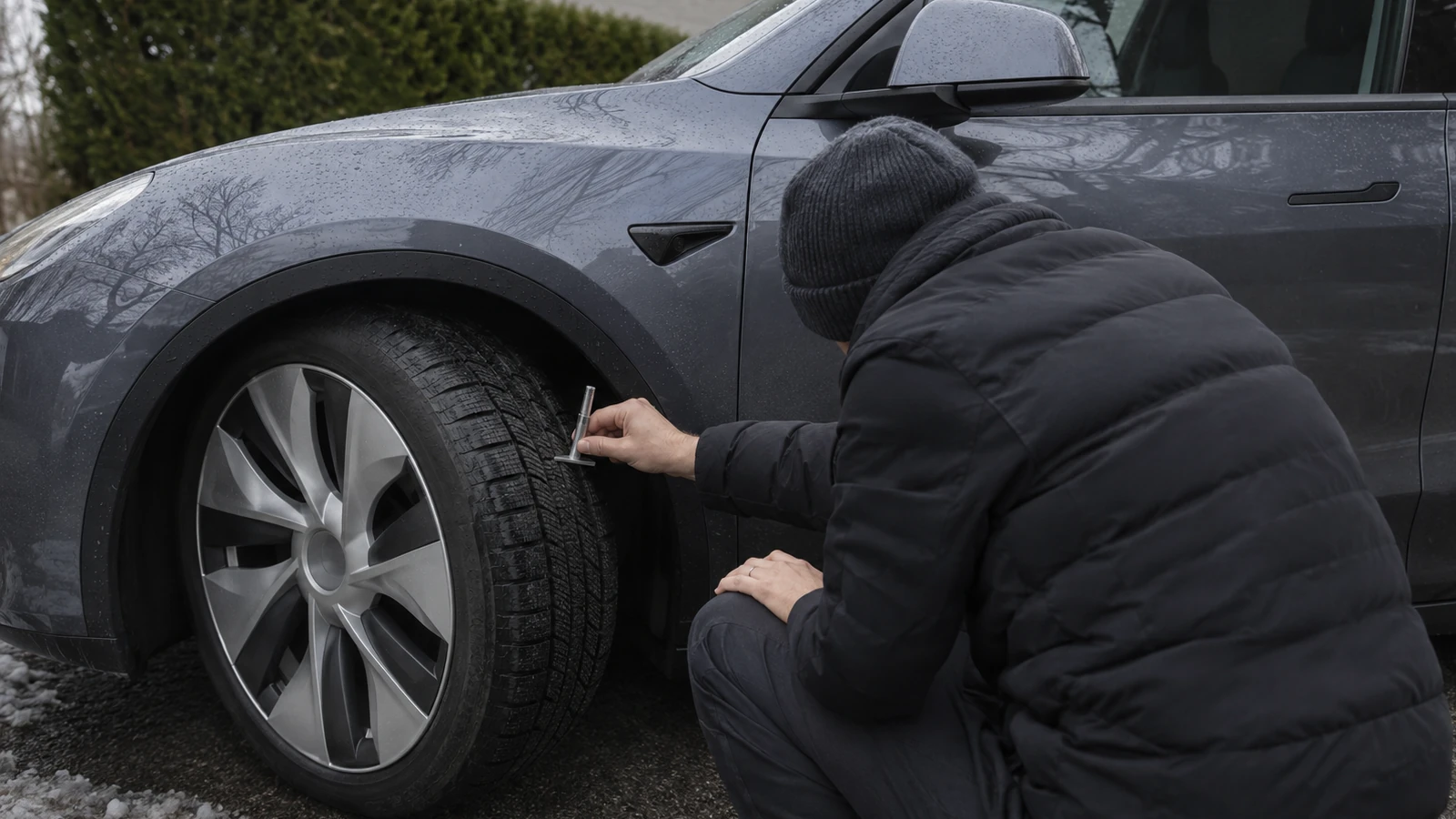
Rotate sooner if, since the last rotation, a tread depth difference of 2/32 in (1.5 mm) or more has opened up.
Brake fluid gets a health check, and it’s only replaced if necessary. Tesla’s UK Model 3 and Model Y manuals and its Cybertruck manual are where the four-year figure comes from. The current US manuals for Model 3, Model Y, Model S and Model X list the check but give no number of years, so ask Tesla Service when yours is due. Towing, mountain descents and performance driving, especially in hot and humid climates, may mean more frequent checks and replacements, Tesla adds.
Every interval assumes typical driving. Tesla says items may need doing more or less often depending on how and where you drive. In China, its recommendation is to replace the cabin filters every year.
Neither the radiator nor the inside of the windshield behind the cameras has a fixed interval. The radiator can clog if you drive in dusty or polluted conditions. Check Controls > Service > Maintenance to see whether either one needs cleaning, then book it in the Tesla app.
What a Tesla doesn’t need
Oil changes, spark plugs, timing belts and transmission fluid don’t appear on any of Tesla’s maintenance lists, and there’s no yearly inspection in the manuals either.
- Coolant. Under most circumstances, Tesla says, the battery coolant won’t need replacing for the life of the car. Checking the coolant and brake fluid levels is a job only for Tesla or a professional repair shop, and the warranty excludes any damage caused by opening the coolant reservoir.
- The high-voltage battery doesn’t need any maintenance from the owner, and there are no user-serviceable parts in the high-voltage system.
- Wear items such as brake pads aren’t on the schedule. Tesla says the list isn’t comprehensive and doesn’t include consumable parts, so you replace those when they’ve worn out. There’s no replacement interval from Tesla for the 12V battery either.
Tires: rotation, balance, alignment and age
On a Model 3, Model Y or 2021 and newer Model S or Model X, you’ll find the miles since the last rotation under Last Tire Service in Controls > Service. When the rear tires have worn more than the recommended difference from the fronts, some cars also show a “Rear tire tread depth low” alert, but Tesla says not to rely on it in place of checking the tread yourself. Driving aggressively wears tires faster and can mean tire service is needed more often.
If your Model 3, Model Y, Model S or Model X has staggered wheels (different tire sizes front and rear) and non-directional tires, only swap the tires side to side, not front to back. After a rotation, the car may need its tire settings updated, and on some cars its tire pressure monitoring may need recalibrating. To see what your model needs, go to resetting TPMS after a rotation.
There’s no fixed interval for balance or alignment, but there is one for tire age:
- Balance the wheels if a vibration comes through the steering wheel (or yoke). Tesla’s Model 3, Model Y, Model S and Model X manuals add: always balance the wheel and tire after replacing a tire.
- Alignment is due when a tire wears unevenly on one side, or when the car pulls left or right even though you’re holding the steering straight. Tesla also recommends an alignment after a new set of tires goes on.
- Age. On Model 3, Model Y, Model S and Model X, Tesla recommends replacing tires every six years, or sooner if required, even if they’ve still got tread. Whatever the model, replace them before the wear indicators show.
Brakes, road salt and winter
A Tesla’s brake pads see less use than those in a conventional braking system, because the car uses regenerative braking. That doesn’t stop rust and corrosion building up, especially where the roads are salted in winter. To prevent it, Tesla recommends pressing the brake pedal frequently so the mechanical brakes are applied, which dries out the pads and rotors.
If the roads you drive on are salted:
- Have the calipers cleaned and lubricated every year or 12,500 miles (20,000 km). Only cleaning is listed in the 2025 and newer Model Y manuals.
- Rinse off the salt from the underside, wheel wells and brakes whenever you wash the car. Corrosion damage may not be covered by the warranty, Tesla warns.
- Dry the brakes afterwards by going for a short drive and braking several times.
Once the brake pads reach the end of their life, their wear indicators squeal against the rotor; Tesla says to contact Tesla Service to have them replaced. It also says the brakes must be inspected visually from time to time, with the tire and wheel removed.
Filters, wipers and washer fluid
- HEPA filters. In Tesla’s Model Y, Model S and Model X manuals, the medical-grade HEPA filter is described as fitted to some cars only, so the three-year interval only applies if yours has one. Cybertruck’s schedule lists a HEPA filter instead of a cabin air filter.
- Wiper blades. A replacement blade for a Model 3, Model Y, Model S or Model X should have the same connector as the original.
- Washer fluid is the only fluid you top up yourself. Each month, Tesla says to check the washer fluid level and that the air conditioning’s working properly. Use a washer fluid that Tesla recommends for your car (you can buy them from Tesla Service). Tesla’s Model 3, Model Y, Model S and Model X manuals say to use one with antifreeze below 40°F (4°C).
- Cameras. Most of Tesla’s current manuals say to clean the cameras once a week when it’s wet and once a month when it’s dry.
What you can do yourself
According to Tesla’s manuals, regular items such as wiper blades and filters are something you can do yourself, or you can have Tesla or an independent repairer handle them. Tesla’s Do It Yourself guides on its support site show you how. Some parts and procedures may not be available for your car, and Tesla says to do a procedure only if you’re comfortable doing it.
Jobs you can take on as an owner:
- Wiper blades and cabin filters (on Cybertruck, the HEPA filter), using Tesla’s guides. Replacement blades and cabin filters are sold on the Tesla Shop.
- Topping up the washer fluid.
- A lead-acid 12V battery on a 2017–2023 Model 3 or 2020–2024 Model Y. To check which type you’ve got and the steps, see replacing the low-voltage battery.
- The key fob battery, covered in changing the key fob battery.
Once you’ve replaced wipers or filters, reset that item under Controls > Service > Maintenance. The car logs a time stamp and the mileage, then reminds you when the item’s due again. Tesla updates the summary whenever it services the car, but it’s up to you to keep it accurate for work you do yourself or have done at independent shops. A factory reset doesn’t erase the service history, so later owners can see it too.
Some things you shouldn’t touch: the coolant reservoir (don’t open it), the brake fluid (don’t top it up) and any high-voltage parts, cables or connectors (don’t take them apart or replace them). Use genuine Tesla parts; according to Tesla, the warranty doesn’t cover non-original or salvaged parts, or any damage they cause.
Booking service and getting a price
To book service, open the Tesla app, tap Service, choose a support topic and describe the problem, then follow the prompts. Include as much detail as you can: photos, sound recordings or videos, when it happened and what the conditions were at the time. When diagnostics are complete, the app sends you a notification to schedule an appointment. Appointments come in three types:
- Service Center: you take the car to a Tesla Service location.
- Mobile Service: when the work can be done away from a Service Center, a technician comes to a place you choose.
- Collision Center: for body repairs after an accident.
What types and times you’re offered depends on where you are and the work needed. Some jobs can only be done by Mobile Service, and some only at a Service Center.
Getting a price. You won’t find maintenance prices in Tesla’s manuals or on its service appointment page. For an estimate, you schedule first: the Service team reviews your appointment details, runs remote diagnostics and prepares an initial estimate, which shows up under Service > View estimate. Before any work is done, you have to review and confirm it. According to Tesla’s US warranty page, repairs expected to be covered by the warranty should appear on the estimate at no cost.
Independent shops. On the same warranty page, Tesla says non-warranty repair or maintenance can go to your preferred non-Tesla service center, but service covered by the warranty needs a Tesla Service Center, and Tesla isn’t responsible for problems caused by improper third-party work. The manuals also say the warranty doesn’t cover damage or failures caused by maintenance or repairs by technicians who aren’t Tesla-certified. Check your car’s warranty documents for the exact terms.
Software updates count too
Software updates are on Tesla’s maintenance list too, and you should install each one at the earliest opportunity. During a service visit, Tesla may also update or reinstall the car’s software. For the steps, see how to install a Tesla software update.
Frequently Asked Questions
Does a Tesla need oil changes?
No. There's no engine oil to change, and none of Tesla's maintenance lists for Model 3, Model Y, Model S, Model X or Cybertruck include an oil change, spark plugs or a timing belt. The schedule is mostly tires, filters, wipers and brake checks. The battery coolant normally lasts the life of the car, and Tesla says owners shouldn't open its reservoir.
How often should Tesla tires be rotated?
Every 6,250 miles (10,000 km), or sooner if the tread depth differs by 2/32 in (1.5 mm) or more since the last rotation. That interval is the same for every model. On a Model 3, Model Y, Model S or Model X with staggered wheels (different tire sizes front and rear) and non-directional tires, Tesla says to rotate them side to side only. After a rotation, most current models need their tire configuration updated under Controls > Service.
Does a Tesla need an annual service?
Not according to Tesla's manuals: none of them calls for a yearly inspection or service visit. The yearly items are the wiper blades and, if you drive on salted winter roads, cleaning the brake calipers (every year or 12,500 miles, 20,000 km), plus Cybertruck's HEPA filter if you drive off-road or on dirt roads. Filters otherwise run on two- or three-year intervals and tire rotation on mileage. The car suggests when items such as wipers and filters are next due under Controls > Service > Maintenance.
How much does Tesla maintenance cost?
Tesla doesn't publish maintenance prices in its owner's manuals or on its service appointment page. To get a figure, schedule the work in the Tesla app: the Service team prepares an estimate, which you review under Service > View estimate and must confirm before any work is done. For jobs you can do yourself, such as wiper blades and cabin filters, check the Tesla Shop for current prices.
Can an independent shop service my Tesla without affecting the warranty?
You can use one, with limits. Tesla's US warranty page says non-warranty repair and maintenance can go to a Tesla Service Center or your preferred non-Tesla service center, while service covered by the warranty needs a Tesla Service Center. Tesla's manuals add that damage or failures caused by maintenance or repairs by technicians who aren't Tesla-certified aren't covered by the warranty, and neither are non-original or salvaged parts. Update the Maintenance screen after outside work, and check your car's warranty for the full terms.
How often should I check the brake fluid on a Tesla?
Tesla's UK Model 3 and Model Y manuals and its Cybertruck manual call for a brake fluid health check every four years, replacing the fluid only if necessary. The current US manuals for Model 3, Model Y, Model S and Model X list the same check without a number of years, so ask Tesla Service what applies to your car. Heavy braking from towing, mountain descents or performance driving, especially in hot and humid climates, may mean more frequent checks. Don't top up the fluid yourself.